
New early-stage sustainability framework applied to reducing emissions through solvent reuse
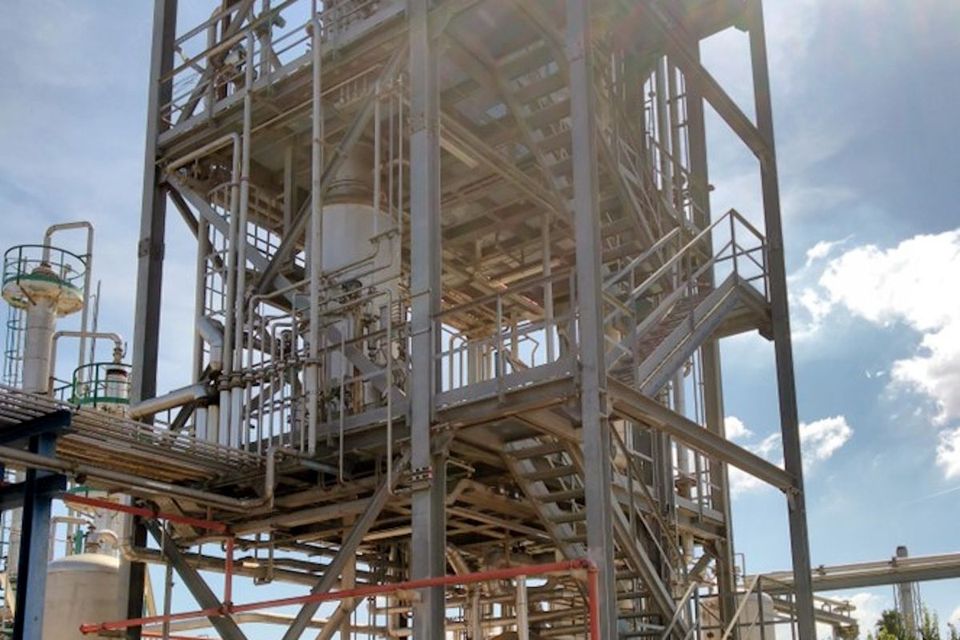
ETERNAL's latest white paper publication provides an evaluation of how to embed early-stage thinking about safety and sustainability in process (re)design as applied to an industrial case study involving five different options for re-engineering acetone from water solvent recovery in part of a commercial API manufacturing process.
The European Commission’s Safe and Sustainable by Design (SSbD) framework requires safe and sustainable outcomes from process and product design, and any subsequent changes to these products and processes. This usually requires a costly, time-consuming life cycle analysis (LCA) which moreover requires considerable technical expertise. The methodologies described and utilised in the ETERNAL white paper provide tools that can be used from project conceptualisation onwards, particularly when specific design parameters such as cost and energy consumption details are not fully known. Aspects of the product or process alternatives that are considered in the so-called ‘FESSA-EED’ study include safety, environmental impact, technical feasibility, business model, supply chain constraints and social impacts. In this way, unnecessary and costly investments pursuing unfeasible options through the exhaustive LCA process can be avoided.

Modified energy Venn diagram adapted from IS 399
The methodology described in the new publication builds in part on recognised good practice standardised in the Irish Standard IS 399 for Energy Efficient Design (EED) Management, and the Framework for Early-Stage Sustainability Assessment (FESSA) developed and published during the course of the ETERNAL project. The new publication exemplifies the combined methodology in the conext of an inidsutrial case study, provided by Angelini Pharma who wished to increase the overall efficiency of a process for acetone solvent recovery by distillation to achieve environmental and economic benefits. By systematically applying Challenge & Analyse (C&A) thinking to identify the optimal solution based upon a consistent set of decision criteria in an evaluation at the earliest stages of the project, subsequent allocation of resources could be appropriately directed towards more detailed, time and resource-intensive life cycle assessment.
The experience of this case study has been used as the basis for drafting of a new CEN Workshop Agreement (CWA) Methodology for Early-Stage Sustainability Assessment and Efficient Energy by Design which has been under review during the last few months. With this process now concluding, the finalised CWA is expected to be published imminently.
This site uses cookies that enable us to make improvements, provide relevant content, and for analytics purposes. For more details, see our Cookie Policy. By clicking Accept, you consent to our use of cookies.